We spend a lot of time discussing the on-line portion of InfoSec: application vulnerabilities, buffer overflows, log review, and network traffic analysis. But physical security remains an important part of an organization’s plan for dealing with threats. Environments that house particularly sensitive data may need to track or detect wireless devices for inventory tracking and secure area sanitization.
Author: roanokeinfosec
Local InfoSec Slack
RISE member Aaron McPhall has set up a Slack workspace for discussion of InfoSec related topics. Networking through local groups is a great way to build your career and maybe even solve a problem or two. Check out the New River Valley InfoSec slack at https://nrv-infosec.slack.com/.
The NRV InfoSec Slack channel is an independent resource and not run or moderated by RISE. We are providing this external link to members interested in building their local professional network.
November 2019 – Selecting a Managed Security Services Provider
Selecting a Managed Security Services Provider shouldn’t be like speed dating, but rather like finding a life partner. This presentation will help guide you in finding an MSSP that meets your organization’s needs so you can “swipe left” on MSSPs that are all show and no go.
BSides Roanoke Logo Debut!

Congratulations to Keith Swagler for his winning submission to the BSides Roanoke logo contest! We liked the simplicity of design, incorporation of the Roanoke Star, and following the general theme of other Security BSides event logos. Keith will enjoy some bragging rights as well as a new Yubikey 5 NFC.
Meeting Notes – Threat Intel 101

RISE member Andrew Beard provided resources and tips for selecting open source data feeds for your threat intelligence platforms. Special thanks to R&K Solutions for hosting this event! Click through for links to video and slide presentation.
Meeting Notes – Capture the Flag Demo
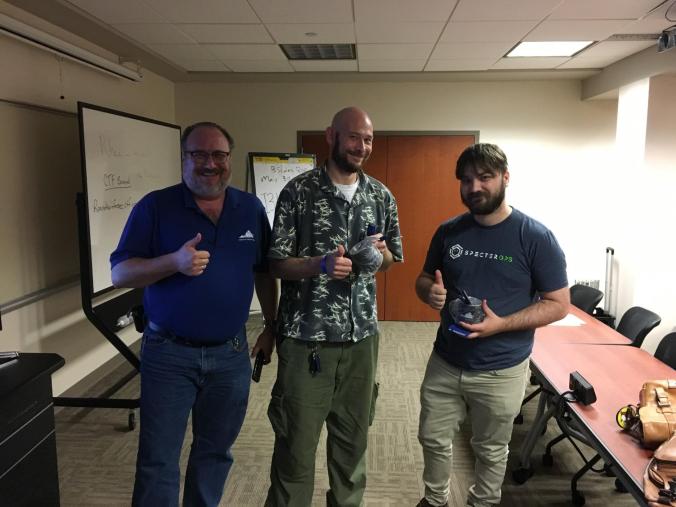
Thomas “Tweeks” Weeks (left) with CTF champs Ken Nevers (center) and Tyler Booth (right)
Fantastic turn-out for the Capture the Flag demonstration held jointly with the Roanoke Linux User’s group. Thanks to everyone who participated! We had a great turnout – almost 50 participants.
New Email Address
You may have noticed those weekly-ish emails from RISE are now coming from a new address! Our new address is info@roanokeinfosec.com. We’ll maintain the old email address but operations will shift over to the new address. If you are on the email list and haven’t received the test email or the October meeting reminder that goes out tonight, check your spam folder and drop us a line at the new address to let us know.
October 2019 – Threat Intel 101
Because nobody actually teaches this stuff in school
The term Threat Intelligence covers a lot of ground, from a known-bad IP address shared on Twitter to the tactics of a state-sponsored hacking group described in a classified DoD report. If you have access to the latter and use that kind of knowledge on a regular basis this talk probably isn’t for you. But if you’re interested in how you can use knowledge of your potential adversaries for network defense, read on!
BSides Roanoke Logo Contest

In case you’ve missed our last couple of meetings, RISE is committing significant time and sweat to planning the first Security BSides in the Roanoke area. We plan to present BSides Roanoke in May 2020!
Here is your opportunity to support your favorite local InfoSec group and make an impact on the premier of BSides Roanoke 2020!
Meeting Notes – Log Aggregation vs SIEM

Local InfoSec professionals showed up for another fantastic RISE meeting. Jared Register presented Log Aggregation vs SIEM and provided some fantastic demonstrations. Special thanks to Sycom Technologies for their support in hosting this event. Click through for link to the video!
 RISE - Roanoke InfoSec Exchange